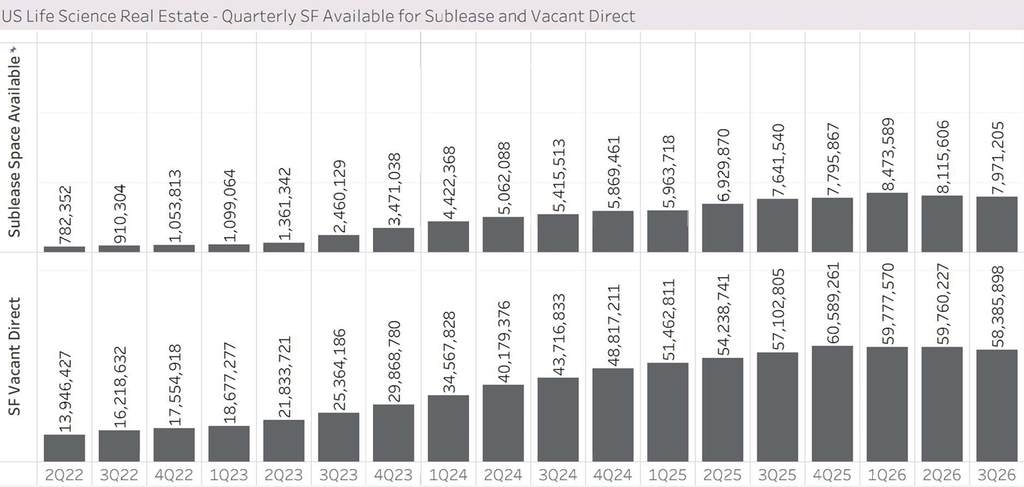
In 2022, sublease space accounted for just 5.3% of total life science availability. At that time, strong demand and limited supply led many growing life science and biotech companies to lease more space than they immediately needed, anticipating future expansion. As investment in the sector slowed and investors became more cautious, companies began reassessing their real estate needs and bringing excess space to the sublease market. More established companies also pulled back on spending and focused on operating more efficiently, further adding to available sublease inventory. By the peak of vacancy in 2025, sublease space had grown to 12.4% of total availability.
Both direct and sublease availability are improving as the market recovers, with sublease inventory declining more significantly relative to its total available supply. Companies remain cautious about spending, and sublease properties often offer a more economical alternative, with existing improvements that can reduce the upfront cost of occupancy. This continued competition from sublease space puts pressure on direct vacancy by capturing a portion of tenant demand and placing downward pressure on rents. The smaller average size of sublease transactions (approximately 48,000 square feet versus 95,000 square feet for direct leases) also means that more individual leases are needed to account for the same amount of square footage absorbed. Follow this and more with a RevistaLab subscription!